Research peptides · Specialized research compounds
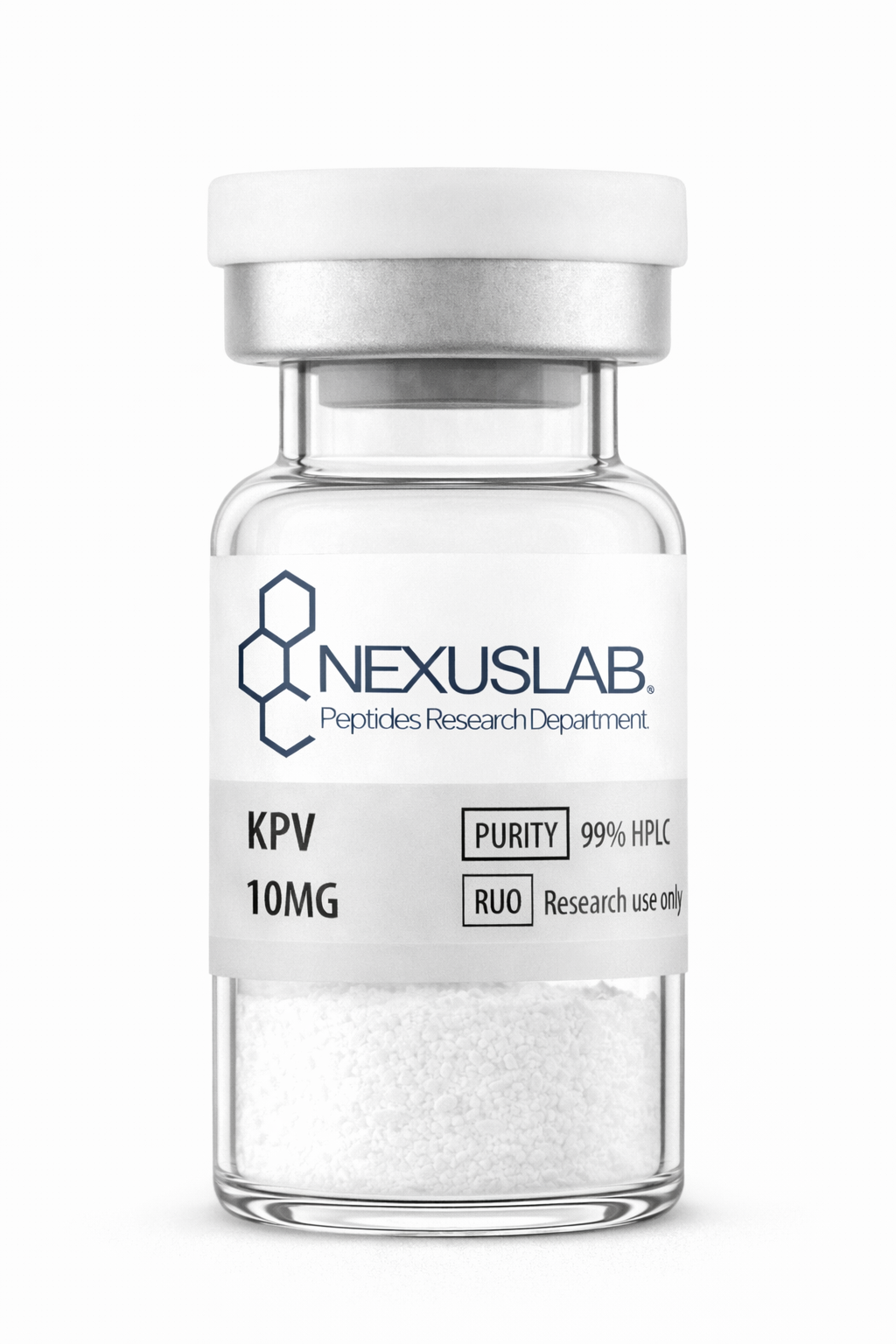
KPV
Available documentary data and items still to verify are detailed below.
Price incl. VAT€72.00
AvailabilityAvailable
SKUKPV
Loading availability…
 0
0
Research peptides · Specialized research compounds
Available documentary data and items still to verify are detailed below.
Loading availability…
02 — Information to verify
KPV denotes Lys-Pro-Val, a tripeptide corresponding to the C-terminal region of α-MSH. Research examines inflammatory signalling, epithelial barriers, and peptide-delivery systems.
Technical data
Format: 10 mg. Reference structure: H-Lys-Pro-Val-OH. The formula represents the tripeptide with free termini, excluding salts and excipients.
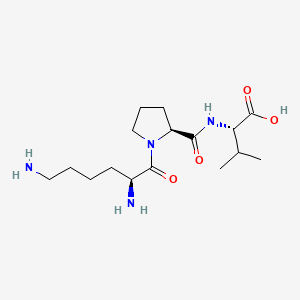
Reference molecular data.
The cited publications study PepT1-mediated transport and hydrogels incorporating KPV. Stability, release, and intestinal-barrier markers are evaluated in cell and animal models. Results for an experimental hydrogel do not automatically describe a vial of peptide alone.
The Gastroenterology study examines KPV transport in intestinal epithelial and immune cells. PepT1 transports di- and tripeptides; its expression affects peptide access to the cellular system. Uptake assays and signalling readouts distinguish transport from the biological response.
Research measures NF-κB and MAPK activation, cytokines, and tissue integrity in cells and mouse colitis models. Other models examine T-cell transfer and melanocortin-receptor involvement. Model differences clarify whether an observation concerns transport, immune responses, or the epithelial barrier.
SH-PGA hydrogel incorporates KPV into a self-cross-linked polymer network. The study measures mechanical properties, stability, and peptide release. A different double-network hydrogel targets adhesion to inflamed mucosa. The matrix contributes to local exposure rather than acting as an inert container.
10.1021/acsbiomaterials.1c00792 10.1016/j.actbio.2022.02.039
The mucositis paper uses KPV with a thermosensitive polymer and EGCG, which contributes adhesion and antibacterial activity. A rat model assesses mucosa, feeding, and weight recovery. Properties of the full formulation cannot all be attributed to isolated KPV.
The bronchial-epithelium reference studies inflammatory signals in cultured human cells. Human cells describe culture origin, not a patient trial.
Catalog of products presented for research activities. Not for human or veterinary use. This notice does not replace verification of applicable rules.