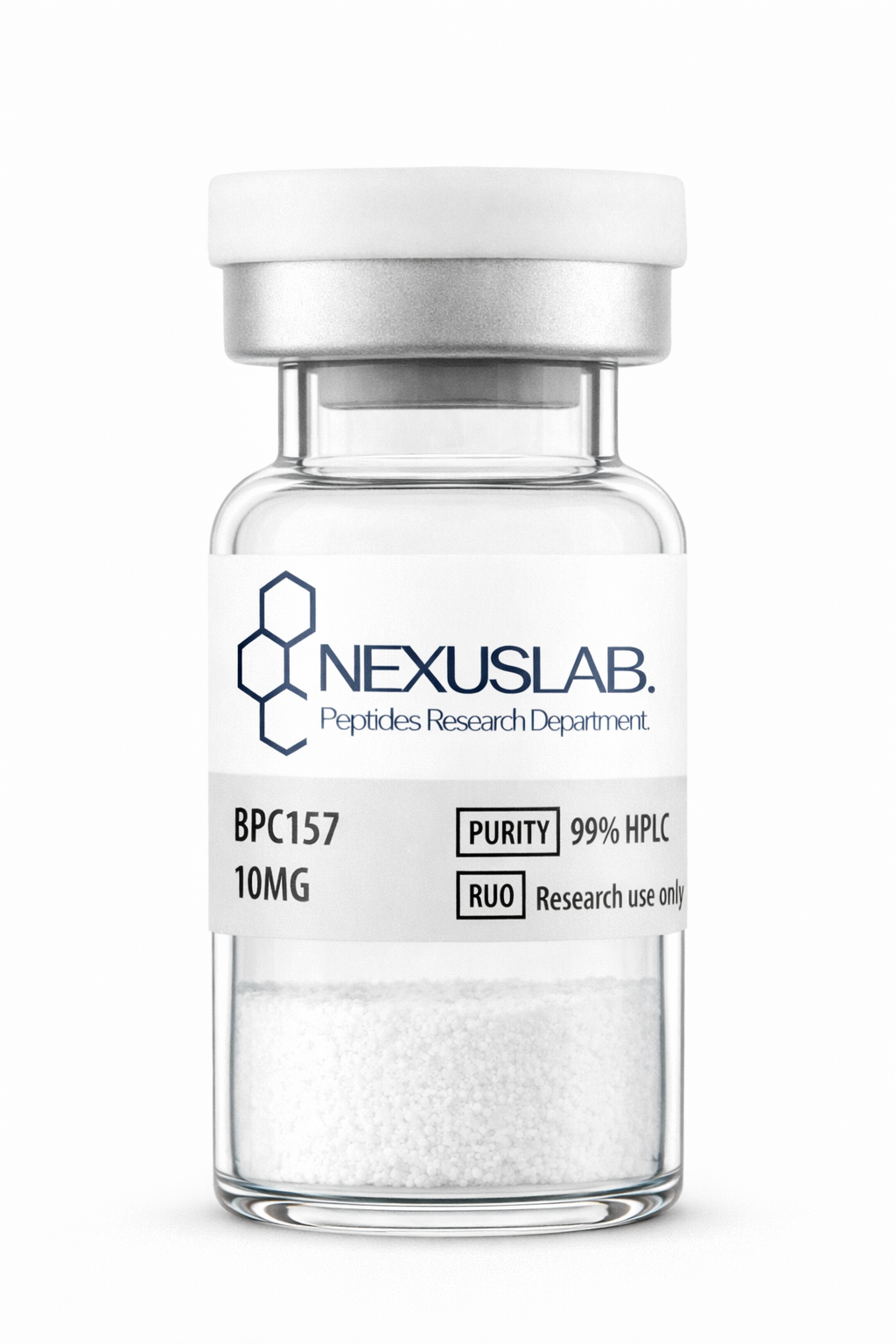
Research peptides
BPC 157
Available documentary data and items still to verify are detailed below.
Price incl. VAT€52.00
AvailabilityAvailable
SKUBPC 157
Loading availability…
 0
0
Research peptides
Available documentary data and items still to verify are detailed below.
Loading availability…
02 — Information to verify
BPC-157, also called bepecin, is a synthetic 15-amino-acid peptide studied in connection with the body protection compound. The literature includes preclinical models involving gastrointestinal mucosa, vascular responses, and musculoskeletal tissues.
Technical data
Format: 10 mg. Reference sequence: GEPPPGKPADDAGLV.
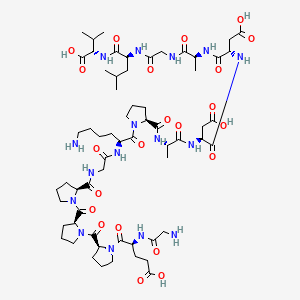
Reference molecular data.
The cited studies examine repair processes in experimental systems and, in a rat model, the consequences of mesenteric-vessel occlusion. Results depend on species, tissue, and protocol. They do not establish clinical efficacy, human safety, or repair capabilities of the item sold.
Research considers mucosal integrity, injury responses, and signalling between the digestive and nervous systems. Cytoprotection describes tissue responses to an injurious stimulus rather than one single mechanism. Reviews collect different experimental models that must be compared by injury type and measured endpoint.
Discussed topics include nitric oxide, cell adhesion, and pathways associated with Egr-1, FAK–paxillin, and JAK. These signals participate in broad cellular and tissue responses. Interpretation must distinguish a change observed in a model from direct peptide binding to a molecular target.
The mesenteric-vessel study uses a rat model of arterial and venous occlusion; another examines suprahepatic caval obstruction. Collateral circulation, thrombosis, and organ injury are assessed. Anatomical and protocol differences prevent these findings from being combined into a general cardiovascular-protection promise.
The musculoskeletal review collects studies of soft tissues and experimental healing. Collagen organisation, histology, and functional measurements address different questions. Improvement in an animal marker does not define sports-recovery times or outcomes for people.
The bibliography considers serotonergic and dopaminergic systems, spinal injury, and vertebral instability in animal models. Some references are conference abstracts, with less methodological information than full papers. Distinguishing publication type and model avoids presenting preliminary observations as established clinical findings.
10.4103/1673-5374.320969 10.1096/fasebj.2019.33.1_supplement.822.5 10.1096/fasebj.2019.33.1_supplement.822.3
The COVID-19 reference appears in Medical Hypotheses and proposes a theoretical rationale. A hypothesis can connect preclinical observations with future questions, but it does not provide efficacy data from a controlled clinical trial. This page therefore distinguishes it from original experiments.
Catalog of products presented for research activities. Not for human or veterinary use. This notice does not replace verification of applicable rules.